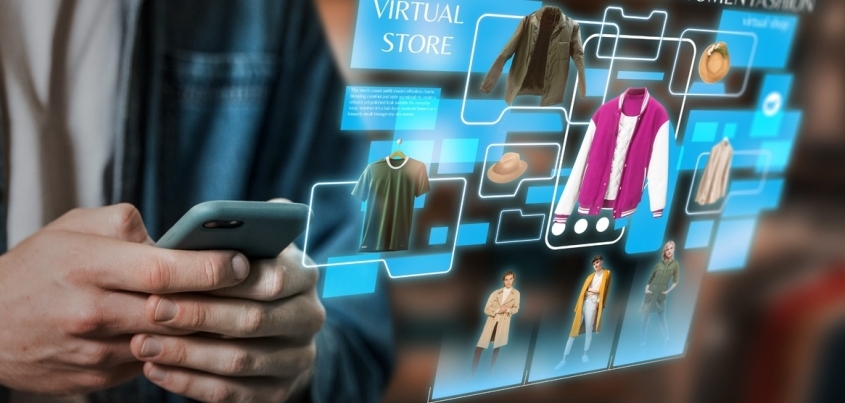

AI shopping agents are starting to research, compare, and complete purchases on a customer’s behalf, which means the choice of which brand gets picked is increasingly happening before a customer ever types a brand’s name into a search bar.
A shopper describes what they want once, and the agent does the discovering, comparing, and deciding.
The uncomfortable part for brands: An AI shopping agent has nothing to recognize in a relationship that doesn’t exist. That’s the shift loyalty teams need to understand now, not next year.
To get an even closer look at how marketers and customers view AI in loyalty, check out our Global Customer Loyalty Report.

What Are AI Shopping Agents and Why Are They Suddenly Everywhere?
The clearest evidence isn’t a single announcement. It’s two independent signals pointing the same direction. Google has confirmed a limited US test of agentic hotel booking, built with Amadeus as the technical partner, that lets an AI assistant complete a reservation rather than just surface a price range.
Juniper Research separately projects $8 billion in retail spend this year will land after AI agents like Claude and Gemini direct shoppers to a site, and Adobe found that those AI-referred visitors convert at 41% higher revenue per visit than shoppers arriving through traditional channels.
How Do AI Shopping Agents Decide Which Brands to Recommend?
When an AI shopping agent researches, compares, and books, it’s making a discovery decision that used to belong to the customer. It makes that decision based on whatever data it can actually access.
A brand with no persistent, opted-in relationship with that customer has nothing for the agent to recognize.
AI doesn’t run on ad auctions; it recommends based on who a customer already is and what they’re already connected to. This is where customer recognition stops being a nice-to-have and starts being the thing an agent can actually act on.
Does a Loyalty Program Actually Help With AI Discovery?
Most loyalty vendors will tell you the fix is simply having a loyalty program. That’s table stakes, not a differentiator.
A generic points scheme (a point per dollar, redeemable for a discount) gets flattened into a list of interchangeable options once an AI shopping agent starts comparing brands, because it carries no identity signal an agent can act on.
What actually functions as a moat is first-party identity data paired with a program that’s unmistakably the brand’s own, not a templated points-and-tiers shell bolted onto checkout.
If you want the more technical side of exposing loyalty value directly to an agent, AI Agents Are Changing the Rules of Digital Growth and Loyalty covers that ground. This piece is about what’s worth exposing in the first place.

The discovery is changing. The way how AI influences the discovery and purchase decision is fundamental. And brands need to understand this.
Loyalty gives them a way to create recognition, relevance, access, community, and direct customer value that are much harder to reduce to a simple comparison.
So basically, just imagine that if the discovery happens within the LLM, then brands will have less and less touch points. Therefore, they need to feed the LLMs with more personalized data to reason for the LLM to suggest their brand in front of the customers.
So this is the second big reason why loyalty is becoming more and more important.
What Should Brands Actually Build to Stay Recommendable?
- Recognize: Capture identity at every touchpoint a customer shows up, including offline, using tactics like zero-party and first-party data collection, so an anonymous buyer becomes a known member an agent can act on.
- Reward: Give agents and customers alike a real reason to pick this brand over a functionally identical one.
- Remember: Build the opted-in, preference-rich profile that persists across channels and keeps the brand relevant the next time an agent goes looking.
Frequently Asked Questions for AI Shopping Agents
Is agentic AI shopping actually happening yet, or is this speculative?
It’s live, not theoretical. Google’s hotel booking test with Amadeus already completes reservations through an AI assistant for a limited set of US users, and named chain partners are already routed through it.
What’s the difference between AI-referred traffic and an AI agent making the purchase decision?
AI-referred traffic means a customer clicked a link an assistant suggested and then bought it themselves. An agent making the purchase decision means the assistant itself compares options and completes the transaction, the way Google’s hotel test does. Adobe’s 41% revenue-per-visit stat measures the first case, not the second, which is worth keeping straight since the two get conflated often.
Does a loyalty program actually help with loyalty in AI discovery?
Honestly, not yet as a proven algorithmic edge. What it does today is build the identity and recognition infrastructure that will matter once agents lean more heavily on it. Loyalty programs helping AI discovery is a bet on where this goes, not a guarantee for this quarter.
Why isn’t a generic points program enough to get recommended by an AI agent?
Because it carries no identity signal, an agent can’t tell a five-tier points program from a five-tier points program at a competitor. What it can recognize is a customer relationship that’s specific, persistent, and unmistakably tied to one brand.
Conclusion
Brands spent the last decade competing for a customer’s attention. The next round is about being the brand an AI shopping agent already recognizes: the customer a brand never needs to rediscover.
Antavo is the AI loyalty and incentives platform that brings together loyalty, promotions, and agentic AI to turn customers into regulars: the customers who come back on their own, buy more often, and bring others with them. For more than a decade, Antavo has powered identity-led loyalty strategies for brands including SKIMS, Paul Smith, KFC, Flying Tiger Copenhagen, and Hyatt’s Inclusive Collection. Marketers build, change, and launch programs and promotions themselves, without waiting on engineering.
If you’re tired of paying to win the same customers twice, book a call with our experts and see how Antavo turns them into regulars.
Don’t forget to grab your copy of the Report!


